Udawalawe National Park: A Guide to Planning Your Visit
Introduction

Udawalawe National park was officially established on 30th June 1972. At that time, There were 2 main goals to achieve by creating this establishment. They are such,
- Provide sanctuary for the displaced wild animals due to the construction of Udawalawe Reservoir.
- And to safeguard the catchment of the reservoir.
The main attraction of Udawalawe National park is the herds of wild elephants that roam freely within the park boundaries. Travelers like you can also spot other animals like leopards, sloth bears, water buffalo, sambar deer, and a wide variety of bird species. In addition to wildlife spotting, the park offers several activities like jeep safaris, bird watching, and nature walks.
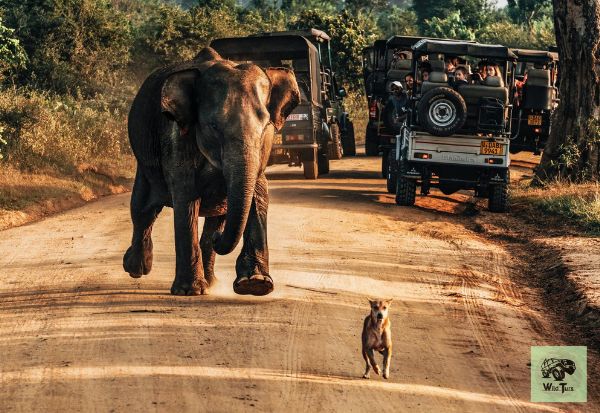
All these wildlife citations are possible because Udawalawe Reservoir borders a side of the National Park and helps fulfill its water needs throughout the year.
The National Park is situated in the Southeast of Colombo(the capital of Sri Lanka) with a distance of 165km (4hr 30min drive via Car). The park borders Sabaragamuwa and Uva provinces and the reserve covers about 30,821 hectares(119.00 sq miles) of land altogether.
With its stunning landscapes and wildlife, Udawalawe National Park is a must-visit destination for nature enthusiasts and those seeking a unique experience in Sri Lanka.
Wildlife in Udawalawe National Park
Udawalawe National Park is home to a diverse range of wildlife, making it one of the most popular nature reserves in Sri Lanka. The park’s unique ecosystem provides a habitat for a wide variety of animals. This uniqueness helps visitors like you to have the opportunity to witness them in their own natural habitats.
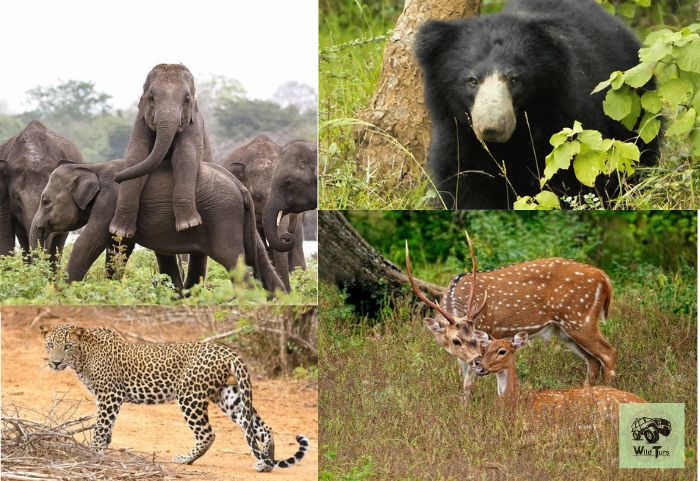
Below are some key wildlife citations that you may see within the National Park:
Elephants
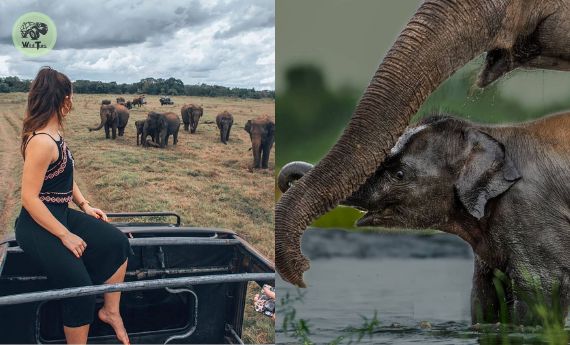
- Udawalawe is best known for its herds of wild elephants, which is one of the largest elephant concentrations in Sri Lanka. According to the latest records, there are about 600 to 700 in total.
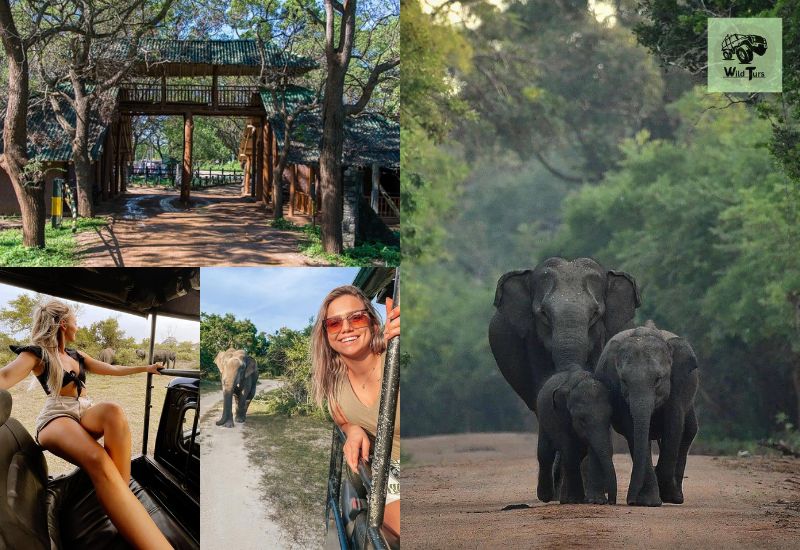
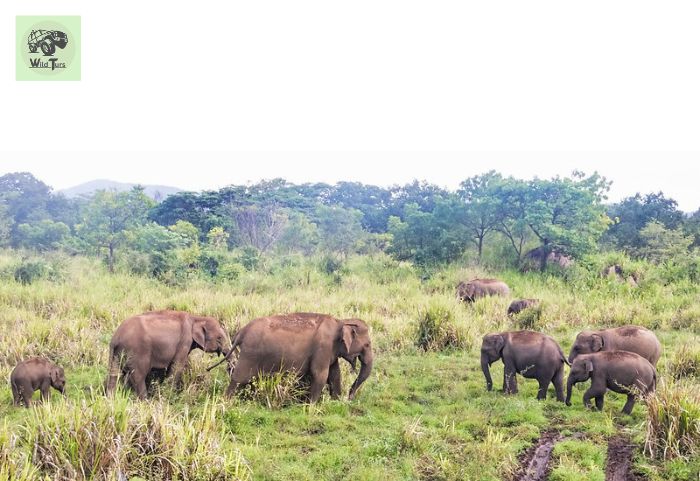
- These huge creatures do not roam inside as a single unit. They move in small units consisting of 2 to 6 elephants or a maximum of 21 including baby elephants.
- Usually, female elephants stick together as a herd until they die.
- While male ones leave the unit when they reach puberty at 8 to 12 years of age. And they live alone or in small packs of 2 to 3 inside the jungle.
- You can observe these magnificent creatures in their natural habitat as they move through the park in search of food and water.
Leopards
- While less commonly spotted than elephants, leopards are also present in Udawalawe National Park. They are elusive and difficult to spot, but with some patience and luck, visitors may catch a glimpse of these elusive predators.
Sloth Bears
- These shaggy creatures are also found in Udawalawe. Although, they are not as common as elephants or leopards. They are usually active during the early morning and late afternoon hours.
Mugger Crocodiles
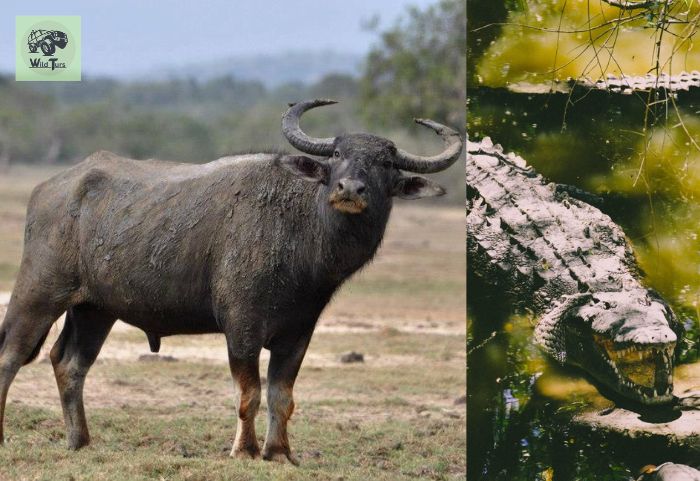
- Most often seen crocodile types in Sri Lanka
Water Buffalo
- These large, impressive animals have been seen often grazing in the grasslands and waterholes of Udawalawe National Park.
Sambar deer:
- One of the most common deer species in Sri Lanka, the sambar deer can also be found in the park.
Bird species
- Udawalawe National Park is a birdwatcher’s paradise, with over 200 species of birds calling the park home. Some of the most notable species include the white-bellied sea eagle, the painted stork, and the black-headed ibis.
Interesting facts and stories about the wildlife in Udawalawe National Park are many.
For instance,
- The park is home to a unique species of fish called the Red Fin Labeo, which can only be found in the park’s reservoir.
- Also, the park’s elephant population is unique due to its high percentage of tuskers (male elephants with tusks), which is rare in other elephant populations worldwide.
- It is believed that Tuskers, the elephants with Tusks are been protected by the herd until they get more than 15 years of age.
- The oldest female elephant in the herd act as the leader(Matriarch) of the herd. The Matriarch knows everything that needs to know to survive. Thus She keeps the herd together and takes decisions regarding where to rest, eat, drink water, and path directions.
- The citation of leopards in Udawalawe National Park is a little bit hard compared to other national parks. The actual count of leopards inside Udawalawe National park is unknown. But in the 2021 August season, a Rare Leopard family with their baby cubs were seen near rocky high ground inside Udawalawe Park.
- When you are seeing buffalos in water holes and Green grounds, check out for Birds like Egrets and Herons who are picking parasites from their back. And even traveling with the buffalo on their back.
Best time to visit Udawalawe National Park
To spot wildlife in Udawalawe National Park, it is best to plan your visit during the dry season (from January to March or June to September), when the animals congregate around water sources. At this time of the year, the rainfall is at its lowest. And the day time temperature averages around 26°C – 28°C (79°F – 82°F).
If you have already reached Udawalawe and searching for what are the best times of day to visit the Udawalawe National Park? , we recommend going on an early morning safari or afternoon safari. Other than that you just need to consider the weather condition of the day.
You can also opt for a guided jeep safari through the park, which is the best way to increase your chances of spotting wildlife. (Contact Us for safari)
Activities in Udawalawe National Park
Udawalawe National Park opens at 6 in the morning and closes at 6 in the evening. Thus you need to exit the park before the gate closes at 6.00 p.m. If you are unable to exit by that time due to any issue, Just contact the forest guarding officer and they will guide you the way out. The safari drivers are well aware of that. Hence you dont need to worry about those things.
Inside the Park, there are a few exciting activities that you can do to experience the park’s diverse wildlife and natural beauty. Below are some of the most popular activities that you can enjoy:
1. Jeep Safaris:
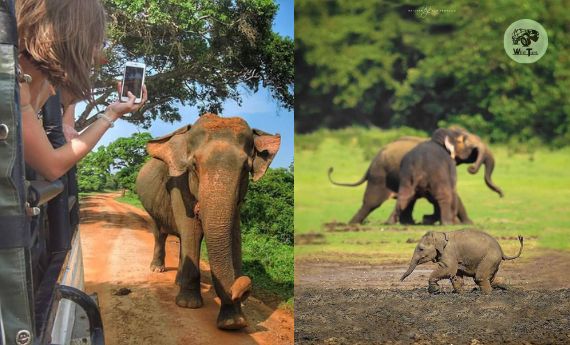
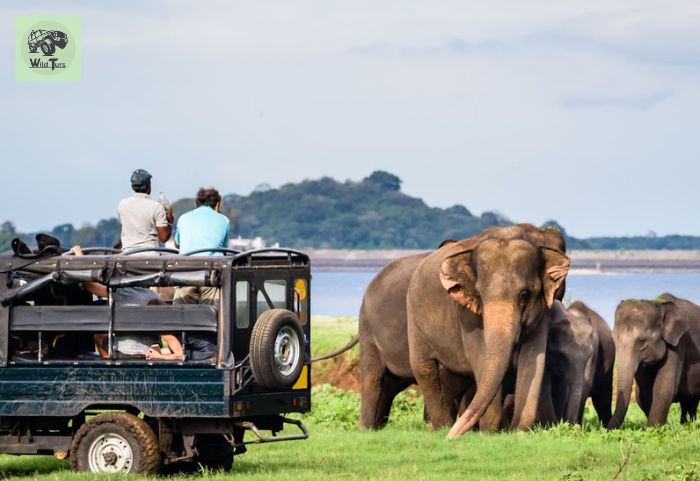
- Jeep safaris are the most popular way to explore the park and spot wildlife. You can book a guided jeep safari and venture deep into the park’s wilderness, where they can observe elephants, leopards, sloth bears, and other animals in their natural habitat.
- Mainly there are 3 types of commonly ongoing safari tours types,
i. Morning or Evening safari
- It usually lasts for around a maximum of 4 hours, Can start early in the morning. (5.30 a.m. to 10.00 a.m.)
- Or the Evening safari which starts around 1.00 p.m. to 5.30 p.m. maximum. And also, these times can vary according to the traveler’s satisfaction and needs.
ii. Half-Day Safari
- Starts in the early morning and ends in the afternoon or afternoon to evening until the park closes. This package offers a 6-hour safari inside the park.
- If you are interested in this kind of safari tour, then it is recommended to carry atleast breakfast or a small snack to full fill your hunger through the journey.
iii. Full-day Safari
- This tour package offers 8 hours of safari inside the park. Usually, they started at 5.30 in the morning (5.30 a.m.) and exit the park at 2 in the evening(2.00 p.m.).
- It is recommended to take some short eats and beverages with you as there is no place inside the park to purchase them.
2. Bird Watching:
- Udawalawe National Park is a bird watcher’s paradise, with over 200 species of birds calling the park home. You can take a guided bird-watching tour and explore the park’s various ecosystems to spot unique and rare bird species.
- You dont need any extra guiding person for spotting birds. Because the safari jeep drivers themselves know the best places to spot them with their own experience. And the safari jeeps are the only mode of driving allowed inside the park.
3. Nature Walks:
- There are some places where travelers are allowed to get down from the Safari Jeep and have a small walk to see the citations on foot.
4. Elephant Gathering:
- One of the unique experiences in Udawalawe National Park is witnessing the elephant gathering, which occurs during the dry season (June to September and December to March).
- During this time, herds of wild elephants gather around the park’s water sources, offering you a once-in-a-lifetime experience of watching these majestic animals in large numbers.
- You can witness this natural phenomenon on a guided jeep safari.
5. Seeing Leopard:
- While elusive, you may have the chance to spot a leopard in its natural habitat in Udawalawe National Park.
- The park’s leopard population is a little bit low compared to other national parks like Yala National Park of Sri Lanka.
- Therefore you may need a bit of luck to witness these elusive predators in action.
To book activities in Udawalawe National Park, You can contact a local tour operator like us through our website. The costs of activities vary depending on the type of activity and the tour operator. You are advised to book in advance to avoid disappointment, especially during peak tourist season.
In conclusion, Udawalawe National Park offers you a range of exciting activities to experience the park’s wildlife and natural beauty. From thrilling jeep safaris to small nature walks, You are sure to have an unforgettable time exploring this unique nature reserve.
Conservation efforts in Udawalawe National Park
Conservation efforts are vital to protect the wildlife and ecosystem of Udawalawe National Park. Here are some of the challenges that the park faces and the measures being taken to address them:
1. Human-Wildlife Conflict:
- The park’s elephant population is one of the largest in Sri Lanka, and as a result, there are often incidents of human-elephant conflict. Elephants can damage crops and property, which can lead to retaliatory measures from local communities.
- To address this issue, the park has implemented measures such as Electric Fences and Trench Barriers to prevent elephants from entering villages.
- Additionally, the park works closely with local communities to promote tolerance and awareness about the importance of conserving wildlife.
2. Habitat Loss:
- Habitat loss is another significant threat to wildlife in Udawalawe National Park. The park’s ecosystem is under pressure due to human activities such as deforestation and agriculture.
- The park has implemented measures to restore degraded habitats and prevent further destruction of critical ecosystems.
- For example, the park has established reforestation programs and works to control the spread of invasive plant species.
3. Poaching:
- Poaching is a significant threat to the park’s wildlife, particularly the elephant population.
- To prevent poaching, the park has implemented anti-poaching patrols and surveillance systems. The park also works closely with law enforcement agencies to prosecute poachers and deter illegal activities.
Also, You can support conservation efforts by practicing responsible tourism. This includes,
- Following park rules and regulations,
- Avoiding littering,
- and respecting wildlife and their habitats.
Additionally, You can support conservation organizations that work to protect the park and its wildlife. Donations to such organizations can help fund conservation efforts and support community outreach programs.
Yes, the park faces some significant conservation challenges. But measures are being taken to protect its wildlife and ecosystem. You can play a role in supporting these efforts through responsible tourism and supporting conservation organizations. By working together, we can ensure the long-term sustainability of this unique and vital ecosystem.
Practical information for visitors
If you’re planning a visit to Udawalawe National Park, here’s some practical information to help you prepare:
1. Getting to the Park:
- Udawalawe National Park is located in the southern part of Sri Lanka and is easily accessible by road. The nearest town is Udawalawe, which is about 15 min ride from the park entrance. You can take a bus, or taxi, or hire a private vehicle to reach the park. (We have all these services. Please let us know).
2. Entry Fees:
- The park charges an entry fee for visitors, which varies depending on your nationality and the type of vehicle you are using (Currently Only safari jeeps are allowed to travel inside the park).
- As of 2022 onward, the entry fee for a foreign visitor is 25 USD per elder person while 15 USD per child (Under 6 are free).
- The fee for a jeep safari is 50 USD for the first three hours and 15 USD for each additional hour.
- By including all the above charges we can arrange your safari. (Contact Us for more package details.)
3. What to Wear and Bring:
- When visiting Udawalawe National Park, it’s better to dress appropriately for the weather and the activities you’ll be doing.
- Wear comfortable clothing and shoes that are suitable for walking and sitting in a jeep for an extended period.
- Additionally, it’s important to bring sunscreen, insect repellent, and a hat to protect yourself from the sun.
- It’s also a good idea to bring binoculars to help you spot wildlife, as well as a camera to capture your experience.
4. Best Time to Visit:
- The best time to visit Udawalawe National Park is during the dry season, which runs from June to September and December to March. During this time, wildlife sightings are more frequent because the animals congregate around the park’s water sources.
- However, the park is open year-round, so you can visit at any time of the year.
5. Accommodation:
- There are several accommodation options near Udawalawe National Park, ranging from budget-friendly guesthouses to luxury hotels. You can book accommodation directly (Contact us if need our assistance) or through a tour operator.
By following these tips, you can ensure a safe and enjoyable visit to Udawalawe National Park. Remember to respect the park’s rules and regulations and to practice responsible tourism to help preserve this beautiful and unique ecosystem for future generations.
Conclusion
Udawalawe National Park in Sri Lanka is a unique destination that offers you an opportunity to experience the country’s natural beauty and wildlife up close. From elephant gatherings to leopard sightings, there are plenty of unique experiences to be had in the park.
You can enjoy activities like jeep safaris, bird watching, and nature walks. And can also learn about the park’s conservation efforts and support these initiatives through responsible tourism and donations.
When planning to visit Udawalawe National Park, it’s important to keep in mind practical information such as transportation options, entry fees, and what to wear and bring.
But ultimately, a visit to this beautiful park is a chance to connect with nature and witness the wonders of Sri Lanka’s wildlife.
So, whether you’re a wildlife enthusiast or just looking for a unique travel experience, Udawalawe National Park is worth a visit. Plan your trip today and discover the magic of this beautiful natural wonder!
FAQs
Yes. Udawalawe National Park is open throughout the year and it has the most elephant concentration compared to other National Parks in Sri Lanka. Therefore if you are wishing to see many Sri Lankan elephants, then Udawalawe National Park safari is the go-to place for it. And also the park is home to other wild animals including Water buffalos, Leopards, Various birds, Sambar deer, Sloth Bears, and many more. Thus Udawalawe National park occupies a special place in Sri Lanka.
The best time to visit Udawalawe National Park is between the dry season (June to September and December to March). It’s because the water levels are at the lowest of park water resources. Hence you can observe easily the wild animals gradually reaching water resources to feed their water needs. This includes the park’s main Attraction, the wild elephants in large numbers tend to stay near these water streams as well.
yes. Udawalawe National Park is home to Leopards. But the density of this wild animal is low compared to other National Parks like Yala.
In addition to the park’s main attraction the elephants, the park is home to several other species. They include mammals like Leopards, Sloth Bear, Wild Boar, and Sambar deer, Birds like Grey-headed fish eagles, Sri Lankan Hornbills, Peacocks, Owls, and Reptiles like Mugger or Marsh Crocodiles, Lizards, Iguanas, Monitor Lizard and many more.